Dulsarita’s Baked Sweets and Treats!

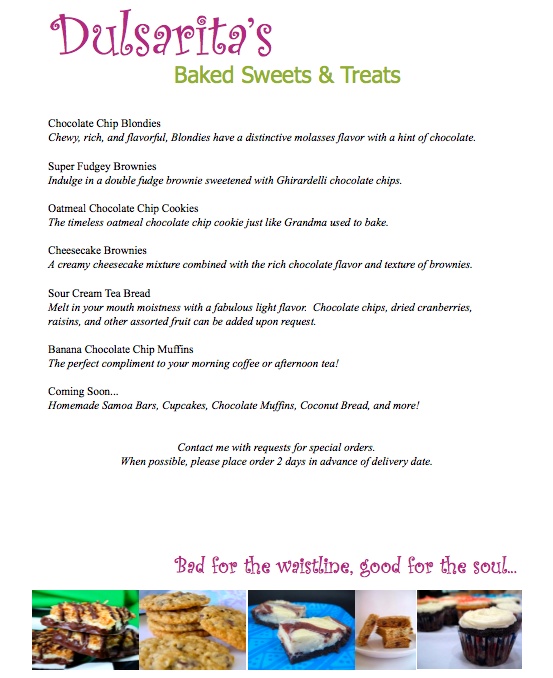
After a year of thinking about it, I am finally pursuing my dream of selling baked goods…in San Juan del Sur, Nicaragua.  Check out the menu below for a sampling of available treats.  Items are available by order and can be delivered to homes and businesses within San Juan del Sur.  Small function catering is also a possibility, with enough notice.  Please feel free to contact me if you would like something not listed on the menu.  I hope to expand the menu in the coming weeks.  If all goes well, I hope to eventually open a bakery, offering sweets, Nicaraguan coffee, and a book exchange.


dulsaritas-menu1

Playa Coco Beachfront Rental

Looking for a relaxing get-away during your Nicaragua vacation?  Read on for more info:

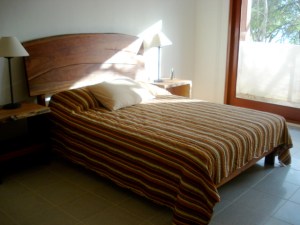
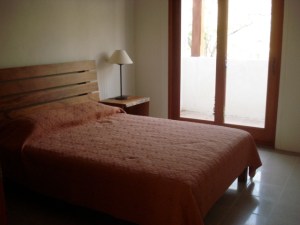
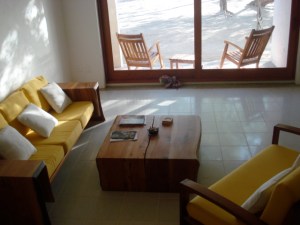
My folks just purchased a beautiful 3 bedroom, 2.5 bathroom beachfront condo in Playa Coco, approximately 15 kilometers south of San Juan del Sur, Nicaragua.  The home is one of 15 completed condos (5 more are under construction).  

In addition to the amenities listed below, Playa Coco Townhomes now offers a beachfront pool, wireless internet, and satellite tv.  


Beach front pool

Beach front pool


dsc07312pc1900161

The home boasts oceanfront views

dsc075132


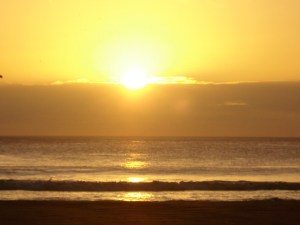
dsc066691incredible sunsets,


dsc073921
dsc073641

roof deck, balconies from all three bedrooms,

dsc072981dsc07305
dsc07308

central air conditioning, flat screen television with Bose speakers, fully-equipped modern kitchen,

dsc07293

hand-crafted furniture from Simplemente Madera,

dsc07341

24-hour security, twice weekly housekeeping.  The house is on the southern end of Playa Coco with the private Escameca Ecological Reserve to the north and La Flor National Park (known for its protection of Olive Ridley Sea Turtles) to the south.

If you think you might be interested in renting the home, feel free to send me a message or visit their VRBO listing at: http://www.vrbo.com/228210.

Stung by a Stingray

A little over a month ago, Justin and I decided to spend the weekend down in Playa Coco.  We packed our bathing suits, board games, and books and invited some friends to come with us.  Saturday was an incredible day – we ran with our dogs in the ocean, witnessed a beautiful sunset, and sat down to an inviting meal with easy conversation.

another tranquil day at Playa Coco

another tranquil day at Playa Coco

Sunday morning, we woke up ready for more of the same.  We gorged on pancakes, bacon, and tostones, and set out for a day in the sun.  It was that afternoon that I experienced the worst pain of my  entire life…

As we approached the water that afternoon, everyone discussed a possible run-in with stingrays.  Apparently, stingrays are more common in Nicaragua when the Pacific is at its coldest (January-March).  So we walked into the ocean with some trepidation, shuffling our feet (to scare off the creepy, slimy rays), but anxious to dive into the refreshing water.  Everyone splashed and swam for a solid 10 minutes before our friend, Yaosca, announced that she thought she felt a ray swim by.  Though a little more nervous, we continued our swim.  Justin and I dove into a rolling wave and as we approached the surface of the water, we planted our feet firmly in the sand.   Unfortunately for me, I actually stepped directly on a stingray.  The piercing pain was instantaneous and I lept out of the water, crawling up Justin’s back like a monkey.
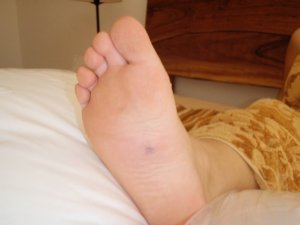
 

First glimpse of the tiny little puncture wound

First glimpse of the tiny little puncture wound

I limped out of the water, with everyone running close behind – anxious to see what happened and to avoid more stings.  By the time we made it to the house, the pain had all but subsided so I changed out of my wet suit and made myself comfortable.  I thought the worst was over, but within minutes, an indescribable throbbing, aching pain returned to my foot that would last for 4 hours.  Unsure of how to help, everyone in the house dispersed to talk to various people in the area for a remedy.  

They returned with suggestions ranging from burning the wound with a cigarette, sticking a hot nail in the wound, to holding a candle flame against the cut.  We opted out of the tetanus-bound voodoo and ultimately decided that I needed heat to help relieve the pain.  Apparently, rays release a toxin when they sting, and the heat helps to draw this out.  For the next 3 hours, my wonderful friends created a water brigade, bringing me a steady stream of pots with boiling hot water.  I felt immediate relief with the initial application of near-boiling water, so we decided to immerse my foot in the pot.  Shortly thereafter, I found that the pain decreased with my foot elevated, so we returned to hot compresses, switching them out as the washcloth cooled down.  Throughout my “treatment,” I felt waves of almost total relief, with the pain dissipating, while at other times, the pain was so unbearable that I cried for it to end.  Eventually, the pain began to dull for longer periods of time and we were able to make the drive back home comfortably.  

3 days later

3 days later


Over the next month, my foot has slowly healed and I’ve had an awesome story to share with friends and family.  I suspect that a puncture wound usually heals much more quickly, but the inconvenient location of it in the soft arch of my foot made this more difficult.
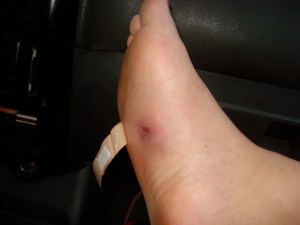
 

1 1/2 weeks later

1 1/2 weeks later


So, for those of you worried about stings, here is some helpful advice:

Rays are not aggressive, so an injury from a stingray usually occurs when a swimmer or diver accidentally steps on one.

The conventional wisdom says to shuffle your feet to let the stingrays know you’re coming. Of course, you’re probably more likely to stub your toe on a rock than to step on a stingray.

If you are stung, don’t panic. Stingrays sting to scare us away. The sting is painful, but not very harmful. Victims should make their way back to the safety of shore by shuffling their feet (so they won’t be stung again).

Clean the wound with fresh, clean water and soap.

Remove small parts or barbs of the stinger with tweezers or pliers.  You may need medical assistance with this.

Stingray stings are caused by a sharp barb that transmits a protein-based venom. This venom causes extreme pain that will spike and decrease over the next several hours, and often leave cuts and abrasions at the sting site. The pain is most extreme during the first 30-90 minutes after the sting, spiking on and off during this time as well. It is common for a sting to bleed and swell.

The toxin may be neutralyzed by immersing the cleaned wound in fresh, hot water (110 – 113 degrees Farenheit) or by placing towels soaked in hot water on the wound. Be careful not to make the water too hot and scald (burn) the victim.  Because stingray venoms are composed of heat-labile proteins, doing this will alter the tertiary structure of the polypeptide protein molecule by denaturing and thereby deactivating the poison. Ultimately this means that the venom will have less effect. Not only does the hot water help with the venom, but at the same time it will significantly reduce the amount of pain the victim is experiencing (borrowed from wikihow.com).

Most importantly, remember that the pain will eventually go away.  In the thick of it, I thought it would never end (and I worried that I was perhaps a little over-dramatic).  However, it does end and makes you all the tougher, should you be the unfortunate victim…

I would like to say that this shouldn’t keep you from returning to the water.  I’m the “fall off your bike, get back on kind of girl.”  But, in this case, I must be honest and admit that I have yet to venture back into the ocean.  I will wade near the shore, but my next full immersion will be the pool or in April, when ray season is purported to end!
Volunteering with Free Medical Clinic in El Baston

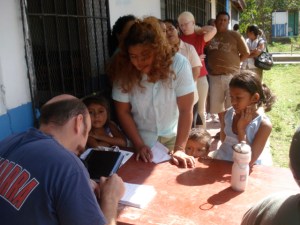
The weekend before Christmas, our friend, Cheri, visited Nicaragua with a team of medical students from Wayne State University to offer 3, 1-day free medical clinics to the less-advantaged folks of the area.  Justin and I helped on the final day, in a town called El Baston, by doing intake for the patients, translating between doctors and patients, and making lunch for the med students.  


Justin gathering medical information from patients

Justin gathering medical information from patients

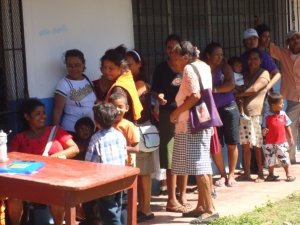
In total, the clinic saw over 100 people on Sunday in addition to the 250 patients seen in Ostional on Friday and Saturday.  It was truly an incredible experience to watch so many people line up and wait, for hours, to be seen by physicians.  


People waited for hours to be seen

People waited for hours to be seen

Most interesting were the number of people who came with no medical problems, but who created an ailment just to receive the attention from the students.   Patients presented with everything from high blood pressure to ulcers to albinism.   The most devastating case was a 6-year old boy with undeveloped legs.  He also appeared to hallucinate, crying and reaching out for people who were not there.  It was unsettling, to say the least, to witness this boy in so much discomfort and not be able to convey his feelings to us.  

n2214475_46259277_8168dsc06873

As people waited to be seen, I encouraged a number of the kids to play a game of soccer with me – truly one of the highlights of the day!  I also really enjoyed simply interacting with everyone while they waited – asking them questions, comforting crying children, and making people laugh.  Everyone seemed to find my broken Spanish incredibly entertaining, but supported my effort to practice my Spanish.


Passing the time playing soccer

Passing the time playing soccer

The day proved to be quite rewarding for both the volunteers and med students, as well as the patients who received medical care.  I am hopeful that more opportunities like this one will become available for the amazing people in and around San Juan del Sur.

Casa de la Mujer – A Women’s Enrichment Center

casa-mujer

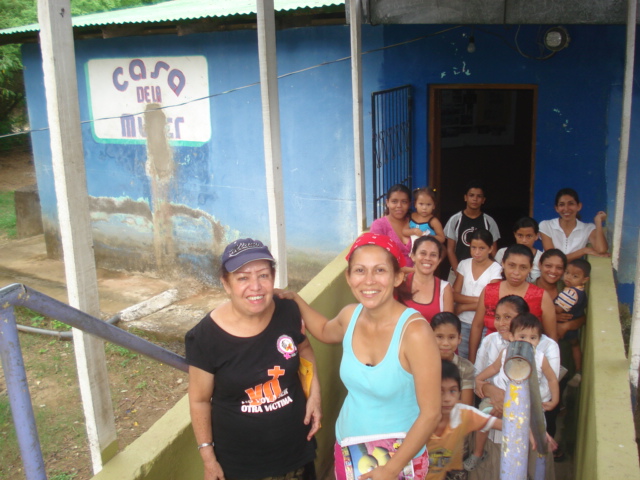
Back in August, an energetic Expat, with fiery red hair, came into our office to talk to one of our sales agents about paying taxes on her property.  In the course of the conversation, I overheard her mention a defunct women’s center, in town, that she was trying to get up and running again.  I quickly introduced myself to Bonnie and asked that she keep me up to date on the center and let me know how I could become involved.  Having previously worked in a women’s shelter for pregnant and parenting teens, back in Boston, I was drawn to this cause.  Fast forward 4 months and I am deep in the thick of it, along with Bonnie, two other Expats (Lee and Rachel), and 3 local Nicaraguan women: Doña Mayra (the director of the center), Thelma, and Argelia.  

Mayra, Argelia, and children of some of the women

Mayra, Argelia, and children of some of the women

Since our first meeting on November 5, 2008, we have exchanged countless emails, held a fundraiser, opened a bank account for the organization, created an informational blog about the center, and established our mission, goals, and planned services.  This past Saturday, we  also had an information table at a local community event, in the park and sold over $100 in raffle tickets.   Most exciting is the prospect of a one-day free medical clinic that we might be able to host toward the end of the month.

Already, this experience has proven to be incredibly fulfilling.  I look forward to meetings when we share the hopes we have for the center and discuss the areas in need of improvement. I truly enjoy  working with local women, working on my Spanish with them, and learning the cultural nuances of a Nicaraguan-Ex-pat steering committee.  The people on this board both inspire me and challenge me to re-think many of my own preconceived ideas.  

In the coming months, we hope to paint the exterior of the women’s center, continue English classes with a formal schedule, begin a cooperative daycare so that the women can work, and lead courses in hospitality services.  If you find yourself reading this and wanting to get involved, either thru hands-on work or a donation, please feel free to contact me via this blog.  For more information, check out our Casa de la Mujer blog.

Stuck in the Mud

There are two consistent things about living in Nicaragua:

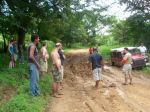
1) If you own a car here (even with 4WD), it is guaranteed to get stuck at some point – in the mud, in a river, in the estuary – somewhere, sometime.

2) If you do get stuck, hordes of people will help you out…and a few will sit and watch the process!

At a time when I was feeling incredibly homesick for the convenience of things in the States, the amount of help we received renewed my faith in living this different lifestyle.

For the new car owner, I suggest purchaing the following items for your car (all easily found in Managua at either PriceSmart, SINSA, or a local ferreteria:

-Durable chain with a hook (for pulling your car out of sticky situations – ropes tend to break)

-Flashlight

-Tire pump (these can be charged at home and then carried in your car or you can plug it into your car’s cigarette lighter)

-Jack

-Jumper cables

-Large jug of water (cars tend to overheat easily here – it’s important to check your fluids regularly and refill your radiator before this happens)

-Patience – can’t buy this one, but be sure to bring plenty with you!


Canopy Tour of San Juan del Sur


Da Flying Frog Canopy Tour

Da Flying Frog Canopy Tour


One of the great things about having visitors is that they encourage us to explore the tourist activities that we otherwise think we are too busy to experience.  During Emily’s visit, I did just that by throwing in the towel at work one day and heading 5 minutes down the Chocolata to Da Flying Frog Canopy Tour.  It was a last minute decision to go and Da Flying Frog was able to pick us up at the Aurora Office in town and drive us to the base of the zip line, located on the border of a farm.  

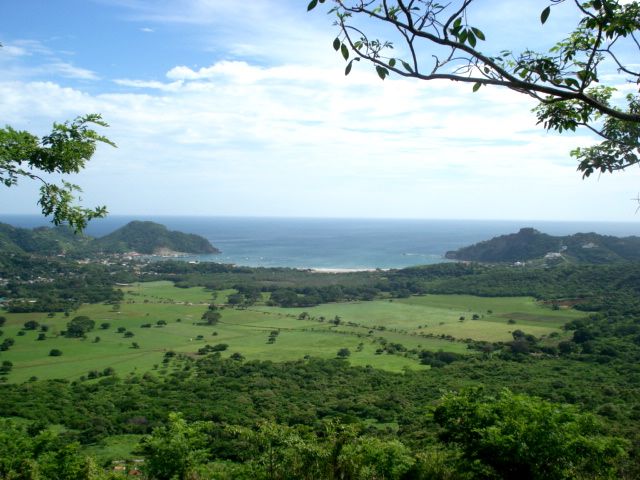
Upon our arrival, the guides gave us a quick tutorial and we headed up the hill in the Jeep.  The Canopy tour starts at the top of a hill, providing commanding views of the Bay of San Juan, the Pacific, and town below.  Once hooked in, you zip between 17 platforms connected by 16 cables, located high above the treetops.  The longest cable is 328 meters; the highest one passes over a canyon measuring 70 meters deep; and at the fastest one you can reach a speed of 70 kilometers per hour.

This is a fantastic way to see San Juan from above – don’t miss out on the opportunity when you visit!


The View from the Start of the Canopy Tour 

Our Awesome Guide

Our Awesome Guide

The View from the Start of the Canopy Tour

The Argonaut


Justin's Urel

Justin's Urel

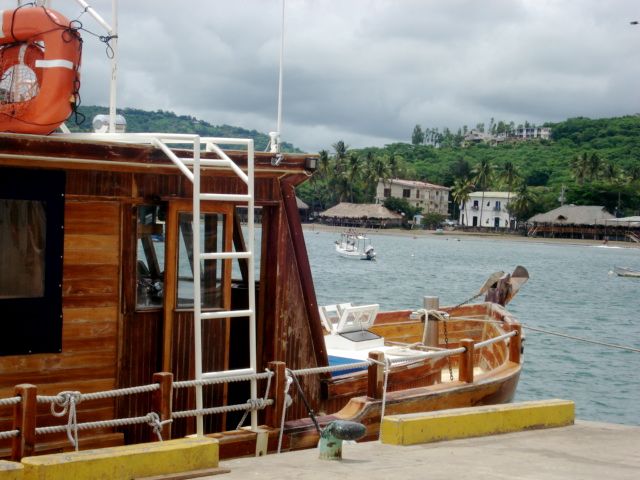
Our friend, Gladis, was nice enough to take us out on the Argonaut – one of the boats from Morgan’s Rock Eco-Lodge.  We motored north up the coast past Maderas, Majagual, and eventually dropped anchor near Playa Blanca and jumped off the boat for a swim.  Our Captain, David, and his assistant, Tito, were great at helping everyone learn how to fish.  In total, the group pulled out about 4 urels and a black tuna.

San Juan del Sur Bay

San Juan del Sur Bay


The Argonaut

The Argonaut

That’s the Weigh it is

So, we’re back to our daily lives in San Juan.   Upon first seeing some of our Nicaraguan co-workers after 3 weeks home, the first thing the girls said to me was “oh – que delgada…” (“how thin”), with smiles on their faces.  I’ve finally become accustomed to this ongoing evaluation of my body, but…

During our first week here back in January, both women in the office told us that we looked much fatter than the photos they had seen of us. My jaw nearly fell to the ground and I was close to tears, having skirted around the issue of weight for 30 years in the States. However, after a week or two here in San Juan, I realized that people are simply more straightforward and say what they think and feel – something I have come to find quite refreshing. Cheers to being honest, I suppose!